


Eddy Covariance Flux Tower established in the Eastern Ghats
NRSC-ISRO and ICAR-IISWC Strengthen India’s Climate Observation Network under the NICES Programme
As part of the National Information System for Climate and Environment Studies (NICES) Program of the National Remote Sensing Centre (NRSC), ISRO, Hyderabad, the ICAR-Indian Institute of Soil and Water Conservation (ICAR-IISWC) has inaugurated a state-of-the-art Open Path Eddy Covariance (OPEC) CO2 Flux Tower at its Research Centre in Koraput, Odisha. This initiative represents a significant advancement in climate science and ecosystem research in India, expanding the nation’s long-term greenhouse gas observation network into the ecologically important Eastern Ghats. The facility was inaugurated by Dr. Ajit Kumar Shasany, Hon'ble Vice Chancellor of the Central University of Odisha, Koraput, in the presence of distinguished guests, including Mr. Harish Singh, Second-in-Command, CoBRA 202 Battalion, Koraput; Mr. Siddharth, IFS, Divisional Forest Officer (DFO), Koraput; scientists from the M.S. Swaminathan Research Foundation (MSSRF), Jeypore; and local researchers, students, and officials.


Dr. Mahesh Pathakoti, Scientist SF, represented NRSC-ISRO at the inauguration in person. Dr. Alok Taori, Scientist-SG and Head of the ASD/ECSA Division, joined virtually and emphasized the importance of the national eddy covariance observatory network. This network provides continuous data on carbon dioxide, water vapour, and energy exchange between land and atmosphere, offering essential scientific evidence for climate change research, ecosystem productivity, and carbon budgeting across India's varied landscapes
Dr. Sudheer Kumar Annepu, Senior Scientist and Principal Investigator at ICAR-IISWC, stated that the Koraput facility is the third operational eddy covariance flux tower established by ICAR under the ICAR-NRSC/ISRO collaboration. He noted that, for the first time, this collaboration links the Western Ghats and Eastern Ghats through complementary long-term flux observatories, providing a unique platform to compare mountain ecosystems in two major biodiversity hotspots. Dr. P. Raja, Former Principal Scientist at ICAR-IISWC, attended as a distinguished guest.


After the inauguration, an Orientation Workshop on Eddy Covariance Data Acquisition and Processing was held for regional scientists, researchers, and students. The workshop covered eddy covariance measurement principles, field instrumentation, data quality assurance, and processing methods to strengthen regional expertise in advanced micrometeorological and climate research.
The Koraput Eddy Covariance Flux Tower strengthens the partnership between ICAR-IISWC and NRSC-ISRO to advance climate observation infrastructure and produce high-quality datasets. These efforts will support national and global initiatives in climate change research, carbon accounting, ecosystem monitoring, and evidence-based environmental policy.
NICES-CORAL : A Flagship Coastal Climate Observatory under NICES Program
Observing Today • Understanding Tomorrow • Securing India's Coasts for the Future
The NICES-CORAL (Coastal Observation Research Laboratory) has been established at Visakhapatnam under the National Information System for Climate and Environment Studies (NICES) programme of the National Remote Sensing Centre (NRSC), ISRO, in collaboration with the Centre for Studies on Bay of Bengal (CSBOB), Andhra University. Envisioned as a facility for sustained coastal climate observations.
The laboratory became fully operational in June 2026, marking a significant milestone in strengthening India’s coastal climate observation capabilities. The formal inauguration of the facility was held on 17th July 2026, jointly inaugurated by Dr. Prakash Chauhan, Director, NRSC and Prof. G. P. Raja Sekhar, Hon'ble Vice-Chancellor, Andhra University, highlighting the strong partnership between NRSC/ISRO and Andhra University in advancing coastal and climate research.
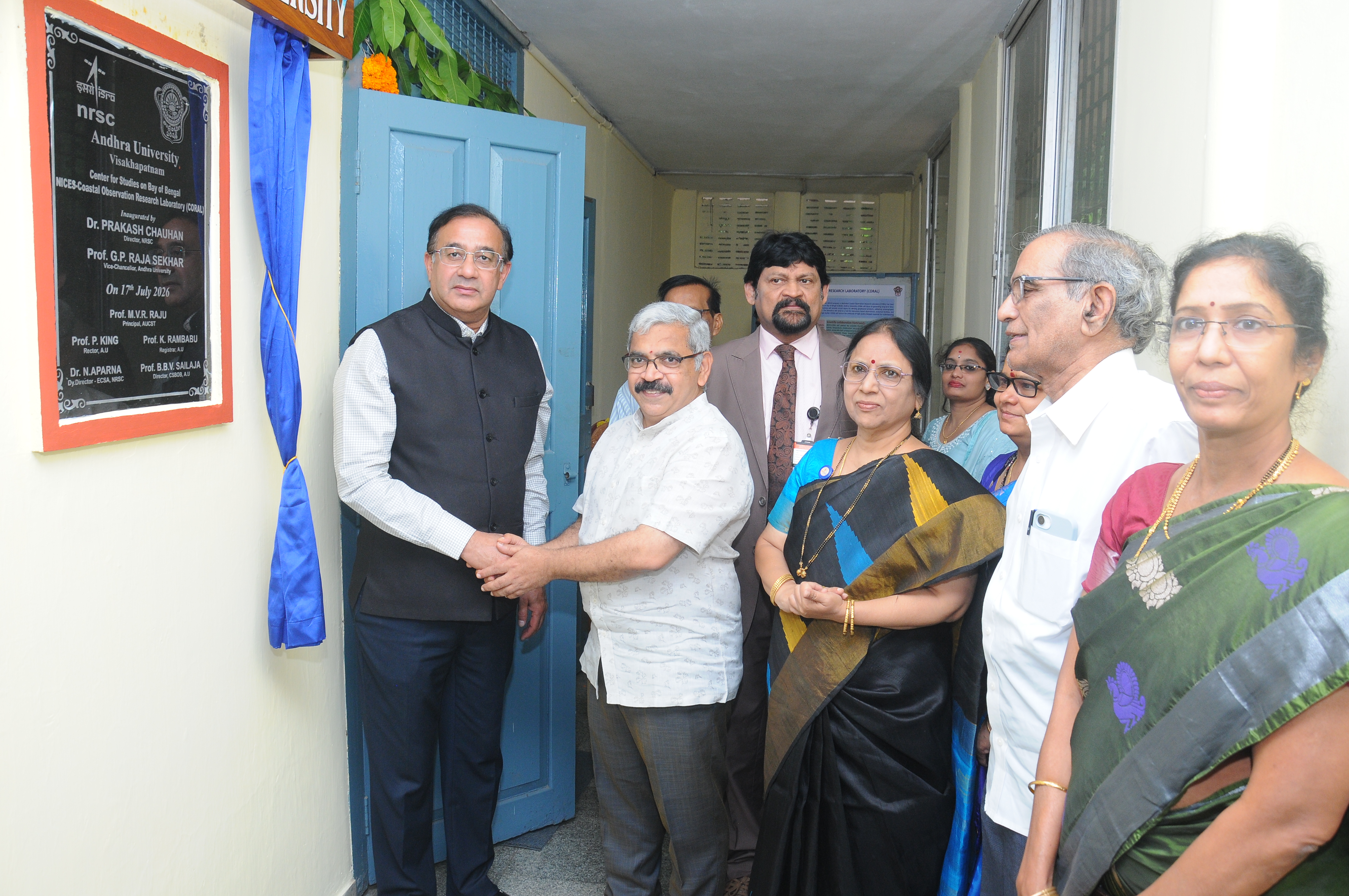

Inauguration of the NICES-CORAL Facility by Dr. Prakash Chauhan, Director, NRSC, and Prof. G. P. Raja Sekhar, Vice-Chancellor of Andhra University in presence of Dr. N. Aparna DD, ECSA and Prof. B. V. Sailaja Director, CSBOB
NICES-CORAL is envisioned as a premier long-term coastal climate observatory, generating continuous, high-quality in-situ observations that complement Earth Observation satellite missions and modelling efforts. The facility is designed to support operational oceanography, satellite calibration and validation and improved understanding of coastal biogeochemical processes in the Northern Indian Ocean (NIO).
The observatory addresses critical scientific priorities including coastal carbon cycling, ocean biogeochemistry, freshwater-coastal interactions, nutrient dynamics, climatedriven changes in temperature and salinity, and the development and validation of regional bio-optical algorithms including EOS-06 Ocean Colour products and future satellite missions. The observations generated through NICES-CORAL will contribute significantly towards improving satellite-derived geophysical products, coastal water quality assessment and carbon flux estimation.
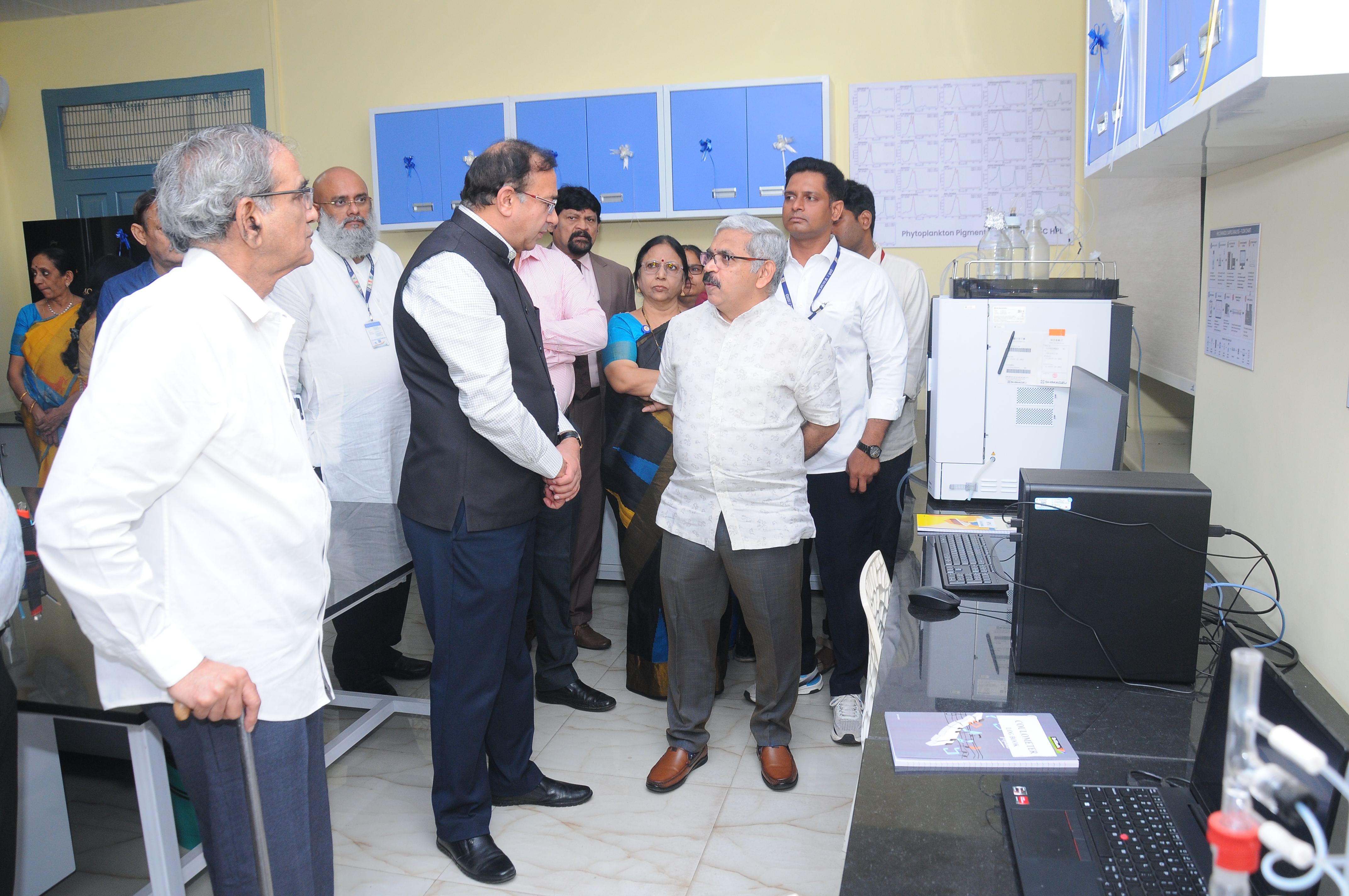
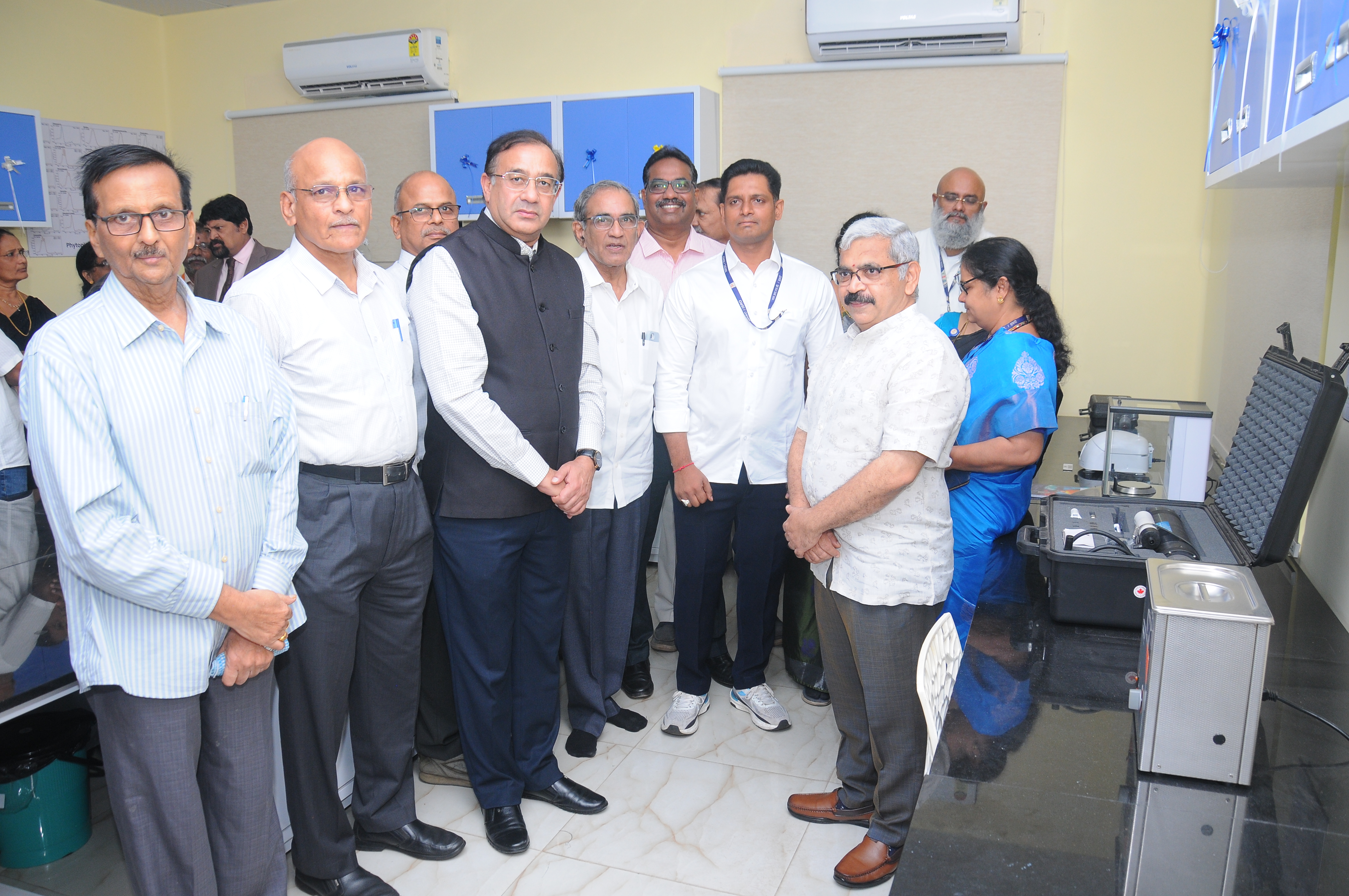
Visit to the NICES-CORAL facility by Dr. Prakash Chauhan, Director, NRSC; Prof. G. P. Raja Sekhar, Vice-Chancellor, Andhra University; Dr. N. Aparna, DD, ECSA; Dr. P. V. Nagamani, GH, OSG, ECSA; Prof. B. V. Sailaja, Director, CSBOB; and other dignitaries
To support these objectives, the facility has been equipped with a comprehensive suite of advanced analytical instruments procured under the project. These include a High Performance Liquid Chromatography (HPLC) system, FTIR Spectrophotometer, Dual Beam UV-Visible Spectrophotometer, Partial pressure of carbon dioxide (pCO₂) Sensor, Coulometer, Sunphotometer, Ozonometer, Nutrient Auto Analyzer, Flow Cytometer, Water Purification System, and dedicated Refrigerated Sample Storage facilities. Together, these instruments enable high-precision measurements of marine biogeochemical parameters, atmospheric observations, water quality, phytoplankton pigments, dissolved carbon, nutrients and optical properties essential for integrated coastal monitoring.
Beyond its research objectives, NICES-CORAL is envisioned as a sustainable coastal observational facility supporting long-term climate data, calibration and validation programmes for satellite missions, interdisciplinary research, and capacity building. The observatory will facilitate collaborations among national institutions, provide advanced training for students and researchers, and contribute to the development of science based solutions for coastal resilience, climate adaptation and sustainable management of marine ecosystems.
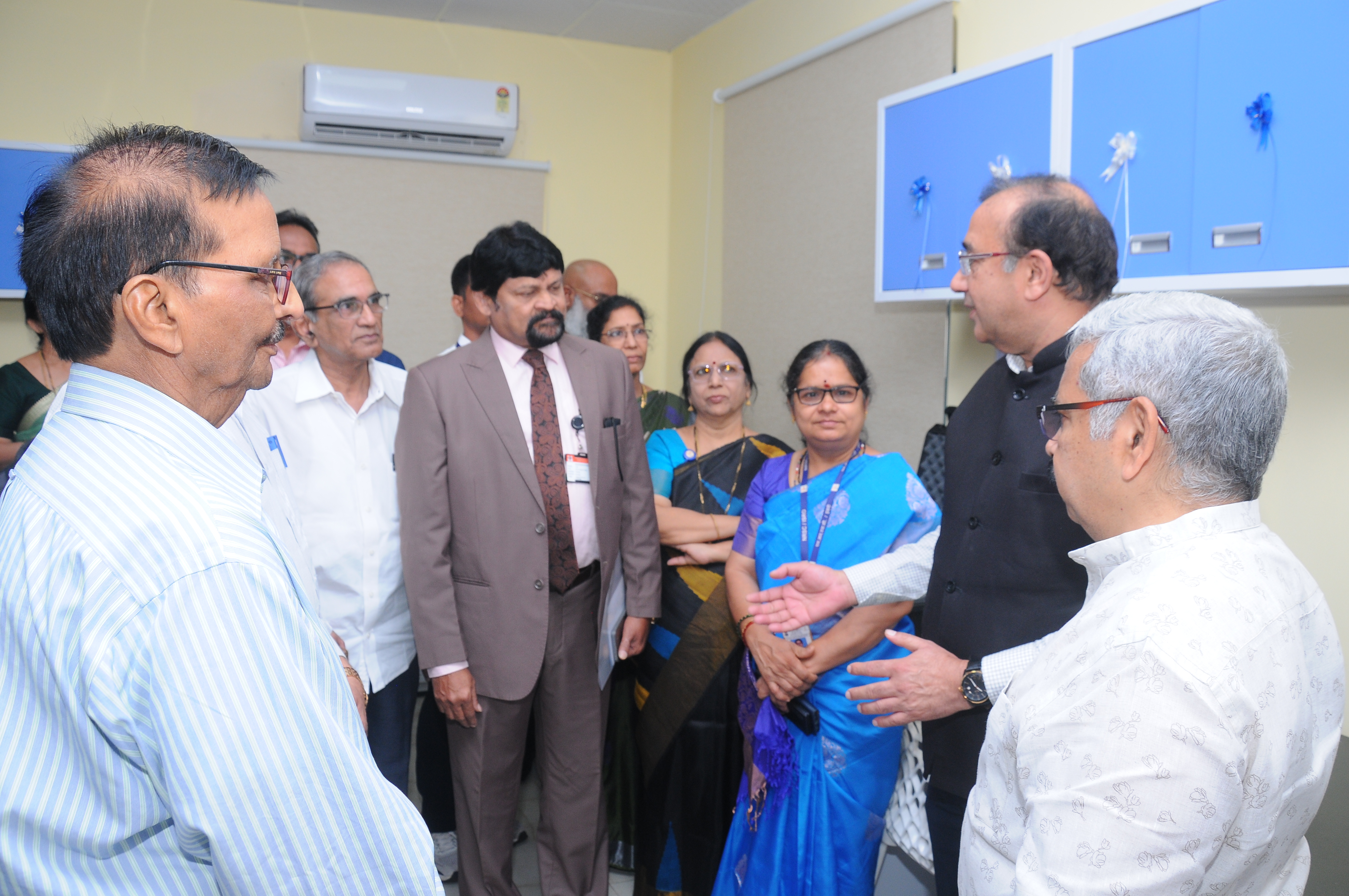
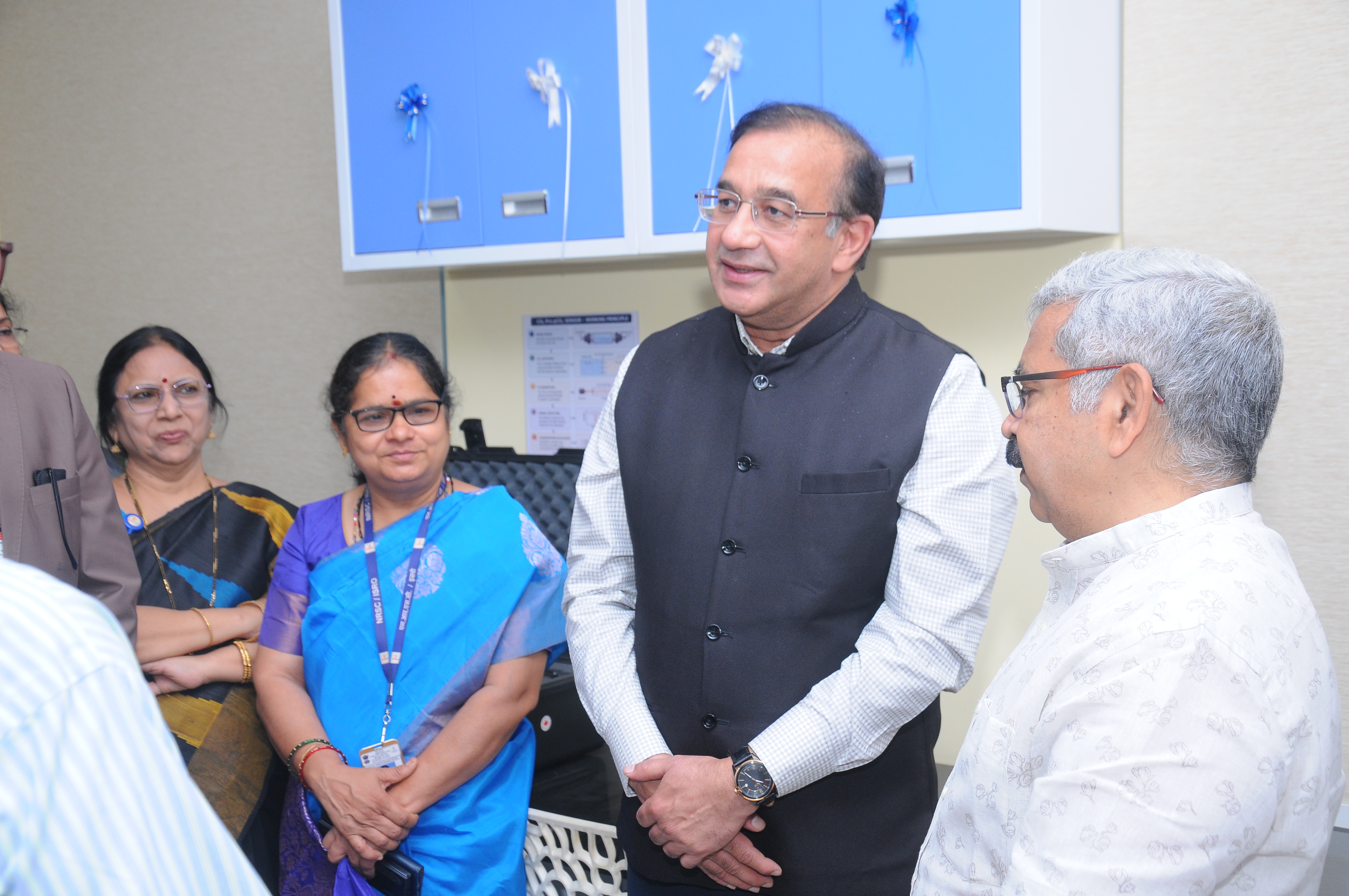
Briefing on the NICES-CORAL Instrumentation and its Scientific applications to the visiting dignitaries
The successful establishment of NICES-CORAL represents a significant milestone under the NICES programme, reinforcing NRSC commitment to integrating field observations with satellite remote sensing to advance climate science and support evidence-based coastal management for the nation.

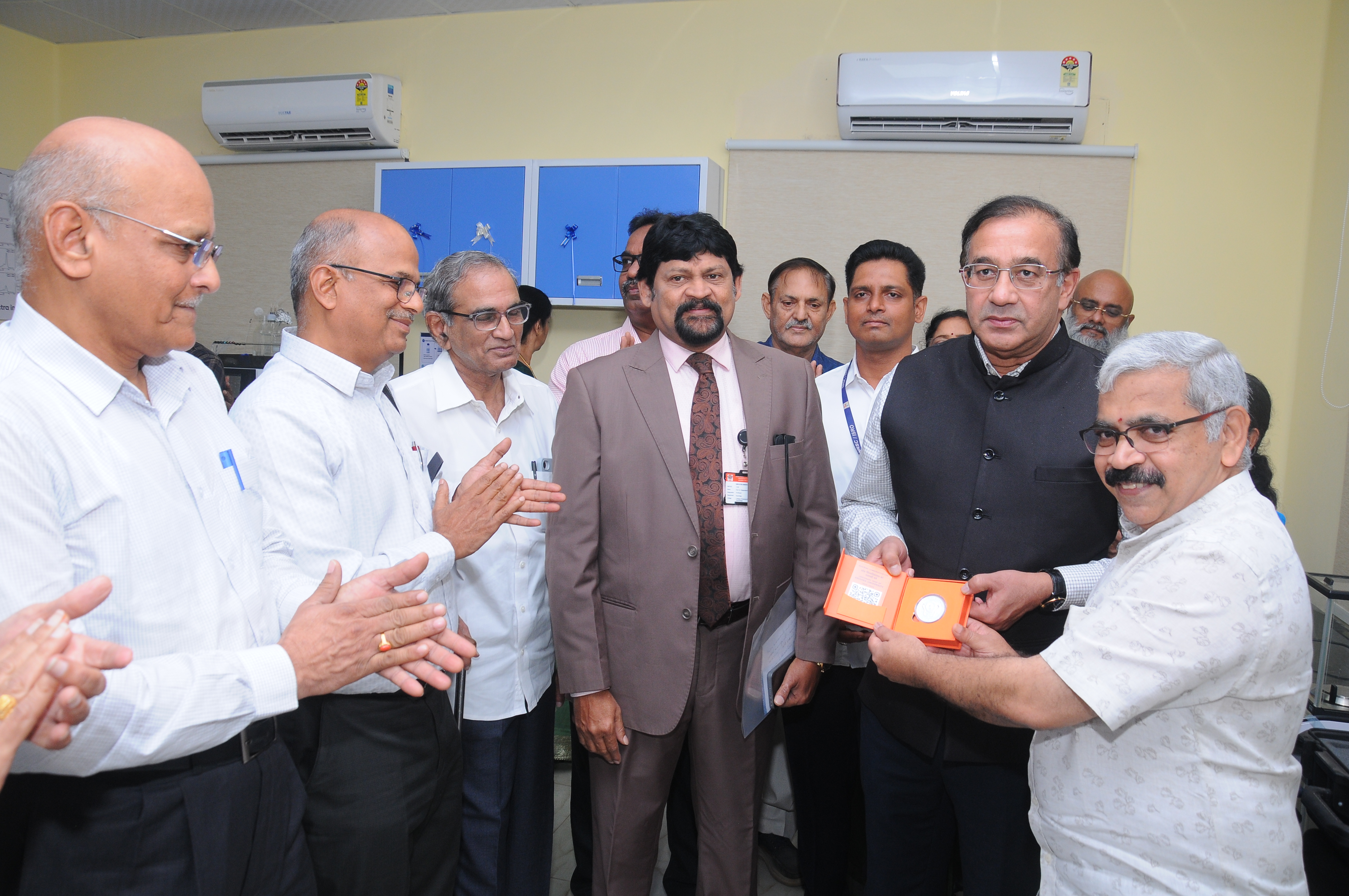
Felicitation of Dr. Prakash Chauhan, Director, NRSC, by Prof. G. P. Raja Sekhar, Vice-Chancellor, in presence of Prof. M.V. R. Raju Principal, AUCST & Prof. B.V. Sailaja Director, CSBOB, Andhra University